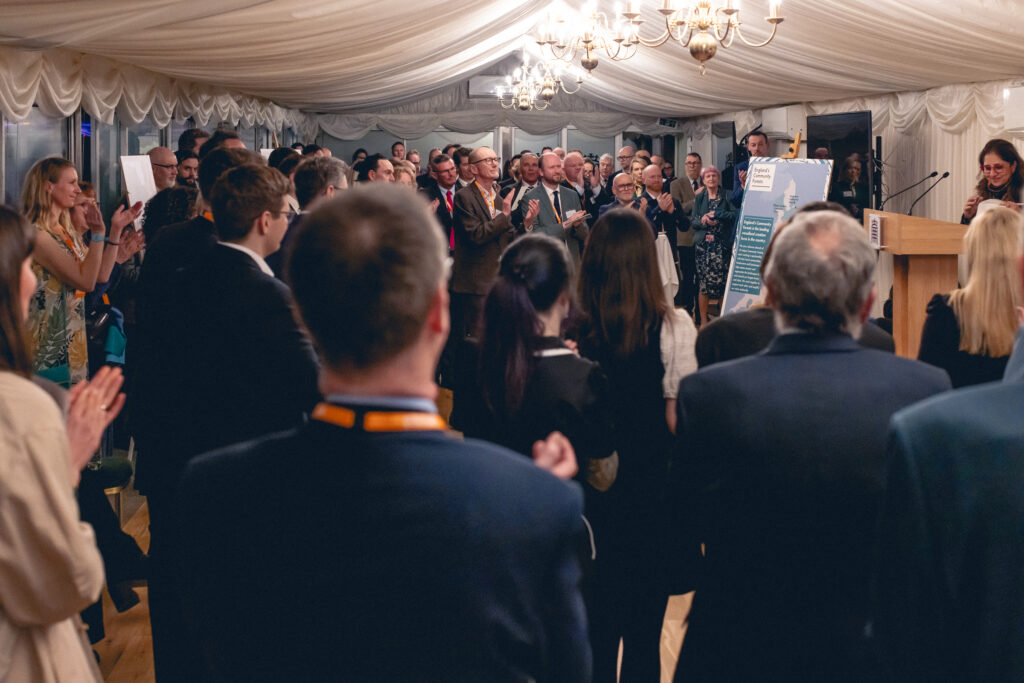
England’s Community Forests network welcomed parliamentarians and partners to its first parliamentary reception last week (2 March) at the House of Commons Terrace Pavilion.
The Directors of England’s Community Forests were joined by Baroness Hayman of Ullock, Minister for Biosecurity, Borders and Animals, MPs, and over 120 partners from across the woodland creation industry to celebrate two major milestones: the publication of 25-year Forest Plans for each of the 15 Community Forests, and the first six years of the network’s flagship Trees for Climate programme
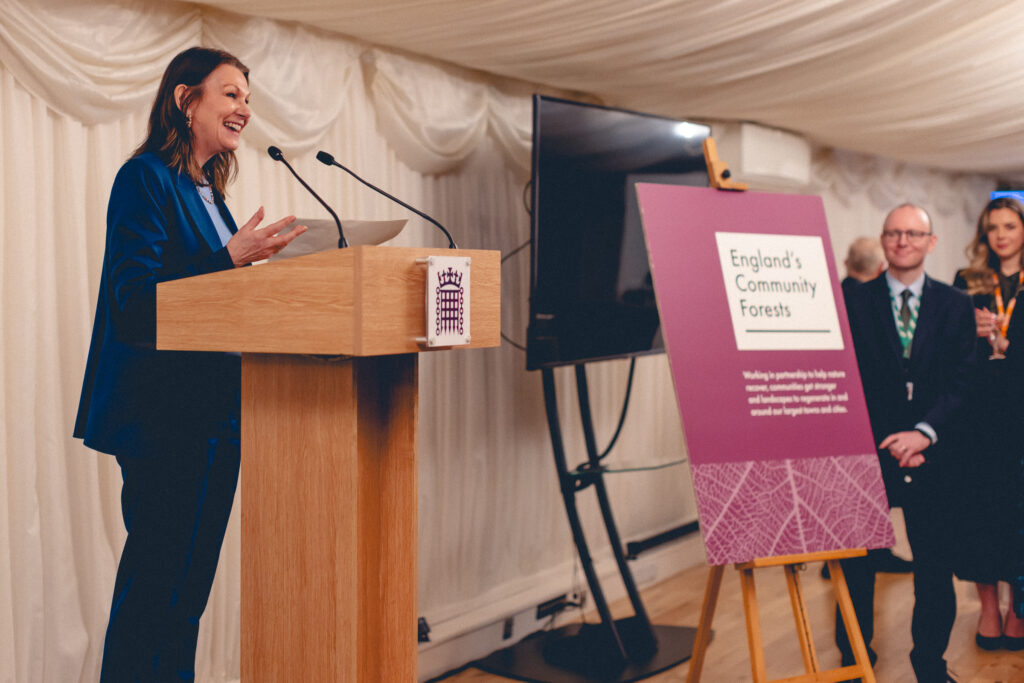
The event comes at a pivotal moment for woodland creation in England, as Government approaches a critical juncture in meeting its national tree planting commitments. With the next phase of Trees for Climate launching in April 2026, ECF set out how its proven, community-led model is ready to scale up delivery quickly and effectively.
A people-first approach to woodland creation
Whilst new trees and woodlands are the visible outcome of the Community Forest model, the network’s focus is firmly on people.
England’s Community Forests work in and around the country’s largest towns and cities, where tree cover is often lowest and need is greatest. Its footprint includes an estimated 1.8 million households in the top 10% most deprived nationally. By creating accessible woodlands and green spaces close to where people live, Community Forests support health and wellbeing, outdoor education, flood alleviation, water quality, nature recovery, skills development and local economic growth.
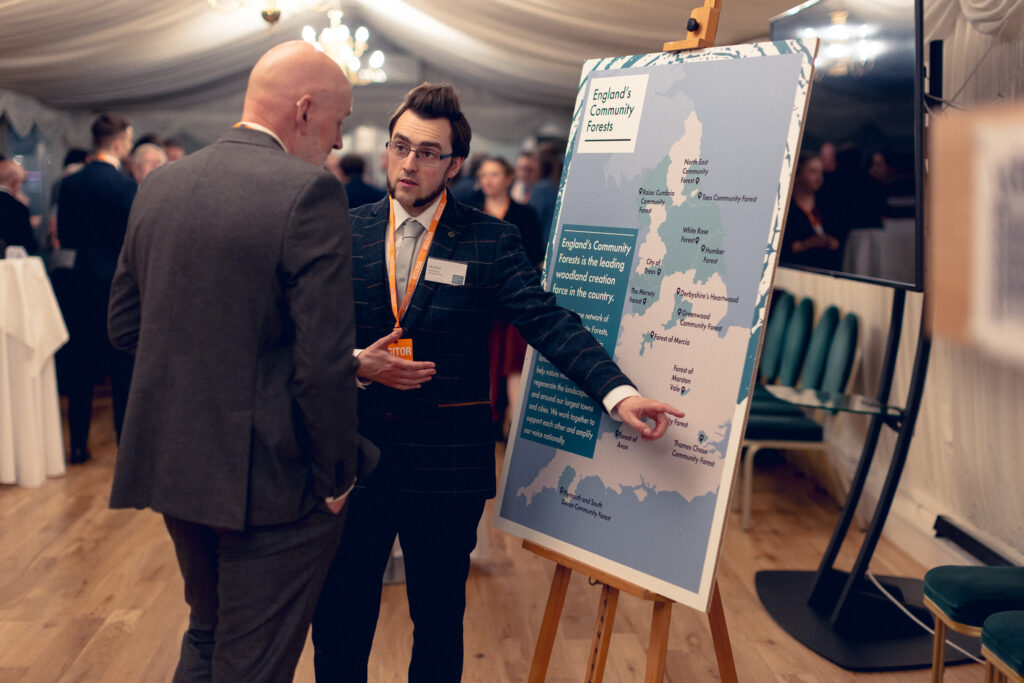
Forest Plans tailored to local need
Each of the 15 newly published Forest Plans sets out a long-term, locally tailored vision for woodland creation and management over the next 25 years.
There is no single template for Community Forestry. Each Forest adapts its approach to local landscape, community priorities and economic context, ensuring that woodland creation works with, rather than against, the local context. This flexibility helps ensure that genuine community ownership is fostered, underpinning greater successes and long-term resilience.
Whilst not exclusively focused on these sites, Community Forests specialise in land that would not typically be considered through conventional forestry channels. Around 80% of schemes are 2 hectares or below, unlocking small parcels of land that might otherwise remain unavailable for tree planting. This ability to identify and convert overlooked sites — particularly in areas of greatest need — makes the Community Forest model essential to meeting national targets.
Meeting national ambitions
As Government seeks to accelerate progress towards its tree planting commitments, Community Forests offer a model that can scale rapidly, with local infrastructure, expertise and trusted local relationships already in place.
Strong community ownership is vital to meeting national woodland creation ambitions. Once planted, trees need long-term care, local champions and public support to ensure woodlands thrive. A people-first approach ensures that woodland creation is not simply delivered to communities, but embraced and sustained by them.
Research from More in Common, published in late 2025, highlights that green spaces are Britons’ greatest source of local pride and enjoyment, cutting across political divides. The Community Forest model – empowering communities as custodians of their local green spaces – aligns directly with this public sentiment and helps strengthen trust and cohesion at a local level.
Speaking after the reception, Kathryn Deeney, Director of Plymouth and South Devon Community Forest and Co-chair of England’s Community Forests network, said: “Our 25-year Forest Plans demonstrate the ambition and maturity of the Community Forest movement. Buoyed by the brilliant delivery we’ve seen through Trees for Climate over the past six years – planting millions of trees, creating thousands of local projects and reaching hundreds of thousands of households – we have demonstrated how effectively our community-led model can work at scale, something we are eager to build on as we move into the next phase of the programme. “Working with partners both locally and nationally, we are not simply planting trees; we are shaping greener, healthier and more resilient places where communities and individuals can thrive. With the right long-term backing, Community Forests can help Government meet its national targets while ensuring that woodland creation delivers lasting benefits for those who need them most.”
Click here to read the England’s Community Forests prospectus launched at the event.