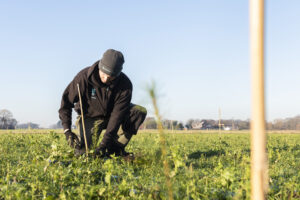
England’s Community Forests has reached a major milestone: planting 10 million trees across England through its Trees for Climate programme.
The landmark figure highlights the scale and pace of tree planting delivered by the network of 15 Community Forests, improving places where people live, supporting local economies, and tackling the impacts of the climate emergency head on.
Funded by UK Government via the Nature for Climate Fund, and delivering in the areas of greatest need, Trees for Climate has increased woodland and tree cover in towns, cities and rural areas – helping capture carbon, restore nature, reduce flood risk and improve health and wellbeing. As the trees grow, they will also provide shade, cleaner air, and accessible green spaces for communities to enjoy.
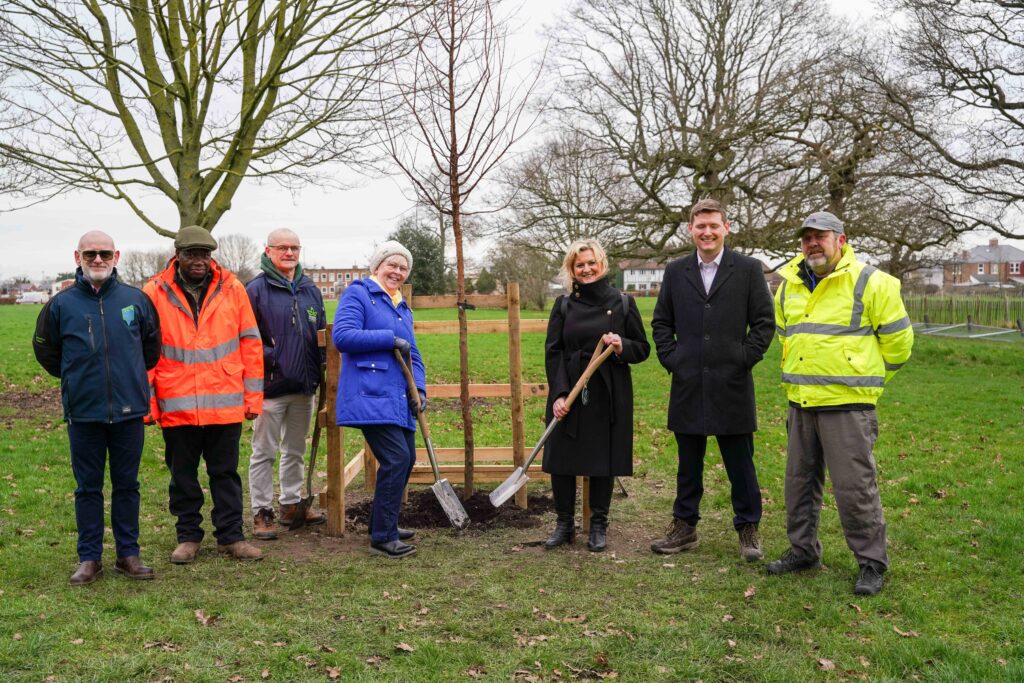
The Mersey Forest Tree Planting at Whitby Park
To mark the achievement, a ceremonial 10 millionth tree has been planted in each of the 15 Community Forests, acknowledging just how vital local communities up and down the country have been to the success of the programme.
Nature Minister Mary Creagh said: “Planting our 10 millionth tree is a remarkable milestone and proof that government investment is delivering results.
“Trees are good for nature, people and climate, and I congratulate everyone whose commitment got us here.”
Trees planted include:
- North East Community Forest – Newcastle’s Town Moor: A Sycamore Gap sapling has been planted in the largest area of protected green space in the city, cared for by Newcastle City Council and the Freemen of the City. The site has been chosen for its ongoing transformation and strong volunteer involvement, and reflects the National Trust’s Rooted in Partnership approach—celebrating shared resilience, collaboration and a hopeful, greener future for the North East.
- Forest of Marston Vale – College Wood, Silsoe, Bedfordshire: Planted by one of the Forest of Marston Vale’s regular volunteers, David Pryor, at a site owned by Cranfield University. David supports the Trust in many ways, from helping with fundraising admin once a week to regularly supervising children’s activities during school holidays, assisting with tree planting activities and getting involved in general outdoor tasks throughout the Community Forest’s sites. Planting at the site has been designed to help Cranfield conduct research into the climate and pest resilience of different tree species, with species sourced from warmer climates including Hungarian oak, Italian alder, Turkish oak and French stock. These species will be monitored and compared with our native English broadleaf species also planted on site.
- White Rose Forest – Top O’ Th’ Hill, Walsden, Calderdale: Top O’ Th’ Hill is the first site to be managed by the White Rose Forest team and sits above the village of Walsden. The new tree planting scheme will buffer existing ancient woodland, increase biodiversity and improve natural flood management in the upper-Calder catchment. The project is being delivered with the local community and volunteers are invited to support the creation of a healthy thriving woodland on their doorstep by taking part in regular planting events this winter as well as future woodland management and restoration activities.
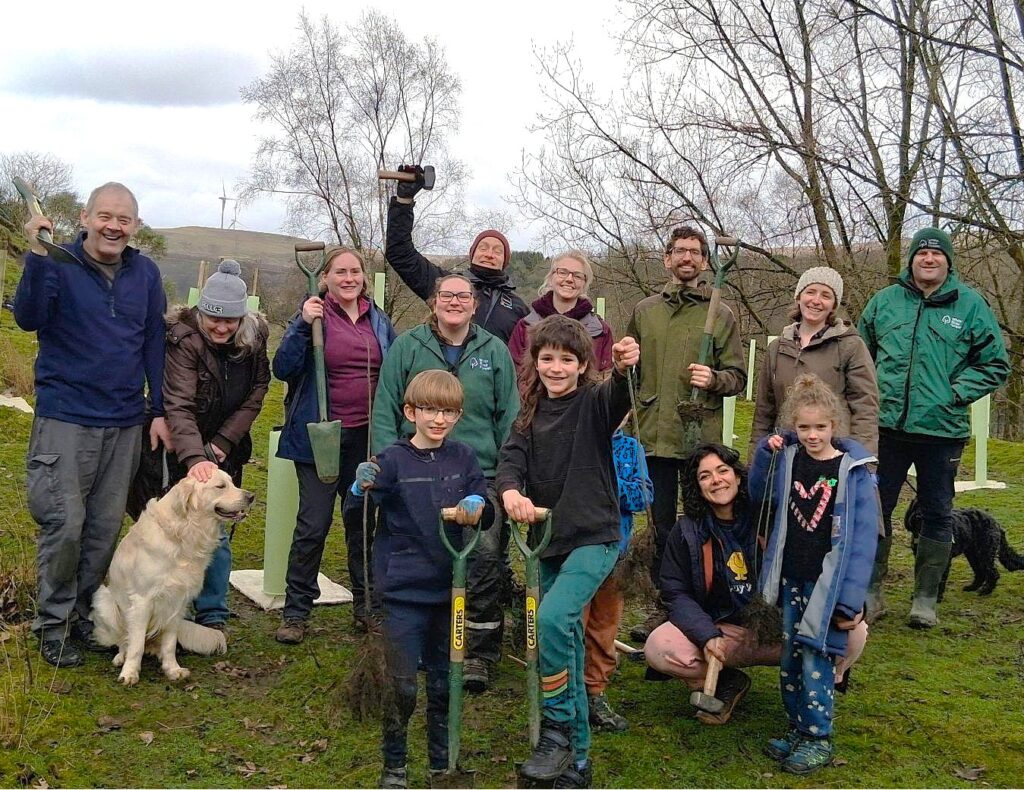
Volunteers help to plant the White Rose Forest‘s 10 millionth tree at Top O Th’ Hill, near Todmorden.
- The Mersey Forest – Whitby Park, Ellesmere Port: A Dawn Redwood has been planted in Whitby Park, Ellesmere Port to mark the success of the Trees for Climate programme. The popular park, hosts weekly Healthy Conservation and Community Gardening sessions as part of The Mersey Forest’s Natural Health Service, providing local people with the opportunity to connect with nature, learn new skills and improve their strength, stamina and wellbeing.
- Tees Community Forest – Seymour Civil Engineering Skills Academy, Hartlepool: Transforming a former brownfield site, Seymour Academy partnered with Tees Community Forest to plant over 180 trees, enhancing biodiversity and creating a greener learning environment. With students involved in delivery, the project provides hands-on experience, strengthens community ties, and leaves a lasting environmental legacy.
- Greenwood Community Forest – Thorney Abbey, near Southwell: A new community orchard boasting more than 50 varieties of fruit trees has been created at a Nottinghamshire woodland. The 55 fruit trees have been planted at Thorney Abbey, near Southwell, as part of a project delivered by the Greenwood Community Forest Initiative.
- Humber Forest – East Park, Hull: A Field Maple has been planted at East Park, Hull to mark the success of the Trees for Climate programme. This large popular Grade 2 Listed park is sited within the heart of the city of Kingston upon Hull. The park provides both locals, visitors and community groups with the opportunity to access & explore a local urban green space and improve their mental and physical health by connecting with nature. The tree forms part of a wider planting scheme Humber Forest, developed within the park in conjunction with Hull City Council, where the community came out in their hundreds to help us plant whips and standards and enjoy the nature-based events and music.
- Plymouth and South Devon Community Forest – West Hoe, Plymouth: A legacy tree was planted on West Hoe to celebrate the remarkable 101st birthday well-known teacher and community leader Suzanne Sparrow, founder of the Suzanne Sparrow English School who has dedicated her life to helping young people learn, grow, and experience different cultures.

Suzanne Sparrow, tree planter at West Hoe, Plymouth
The success of Trees for Climate – delivered in partnership with local authorities, landowners, farmers, charities, community groups and volunteers – comes at a critical time for tree-planting across the country. The UK Government has committed to significant enhancements in woodland creation, including investing £1 billion in tree planting and support to the forestry sector over this parliament.
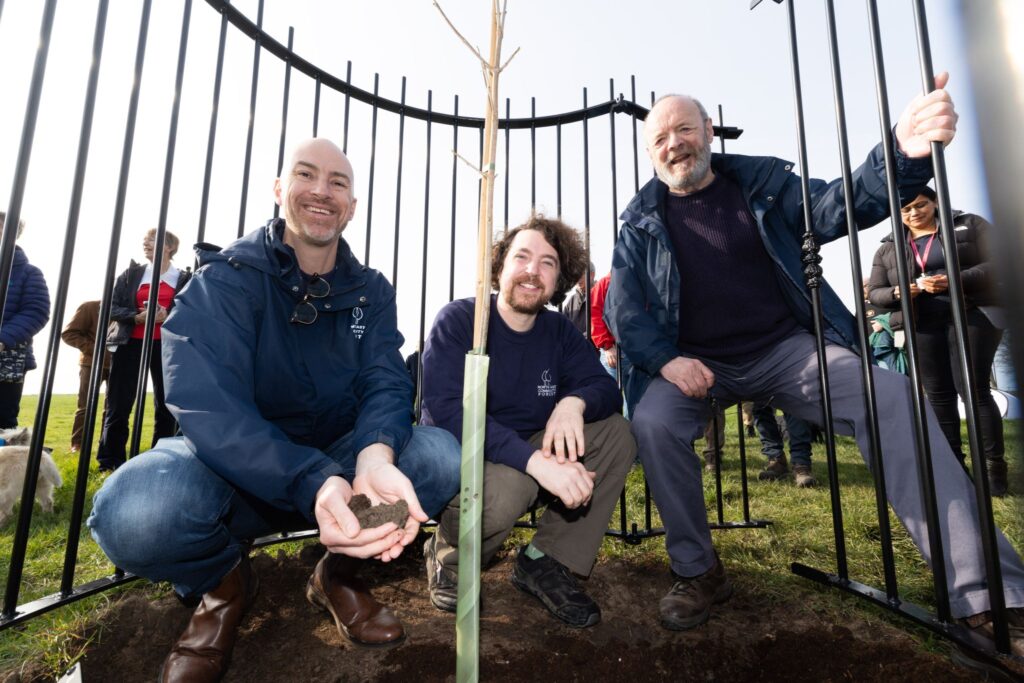
North East Community Forest tree planting at Newcastle’s Town Moor
This is a great example of how expanding tree cover and supporting nature recovery can bring real benefits to communities across the country, and I want to congratulate everyone involved for the vital role they are playing”.
The next phase of Trees for Climate will see England’s Community Forests working alongside national partners to bring together complementary expertise, networks and landholdings, helping scale up delivery and maximise long-term impact.
By combining local, place-based delivery with national reach, the partnership will support the creation of more resilient woodlands and trees in the landscapes and communities where they are most needed.
Kathryn Deeney, Co-Chair of England’s Community Forests network and Director of Plymouth and South Devon Community Forest, said: “10 million trees planted through Trees for Climate is a fantastic milestone that we are all proud to have achieved – but it’s also a springboard for what comes next. Working with our local and national partners, we look forward to building on what we’ve learned to help deliver even greater impact and benefits for local communities in the years ahead.”
Cllr Louise Gittins, Leader of Cheshire West and Chester Council, the accountable body for the programme, said: “We are incredibly proud to have played a role in the success of the Trees for Climate programme since 2020. Trees are one of the most powerful tools we have to tackle climate change, support wildlife, and create greener, healthier places for people to live and work. On behalf of Cheshire West and Chester Council, I would like to thank everyone involved in making the programme such a success – together, we are making a lasting investment in our communities, places and environment.”
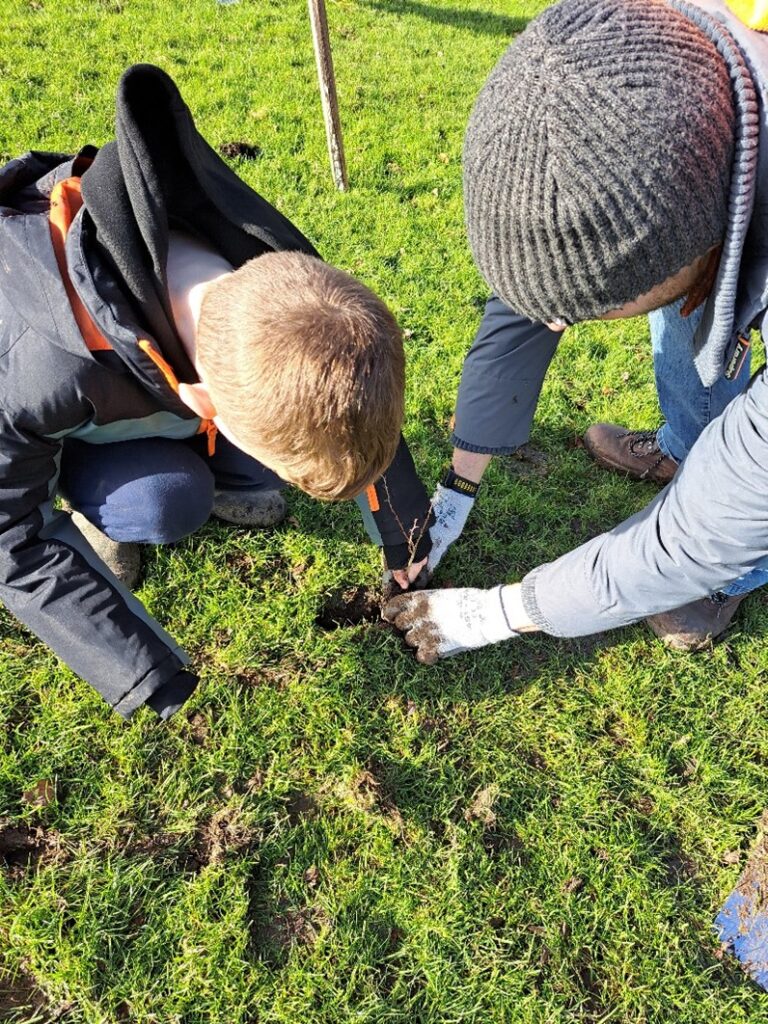
Planting at East Park, Hull
Are you a landowner or farmer interested in planting trees on your land? Visit www.englandscommunityforests.org.uk/landowners to learn more about Trees for Climate and get in touch with your local Community Forest.